
SECUREC ACADEMY
Build security habits, not checkbox completion.
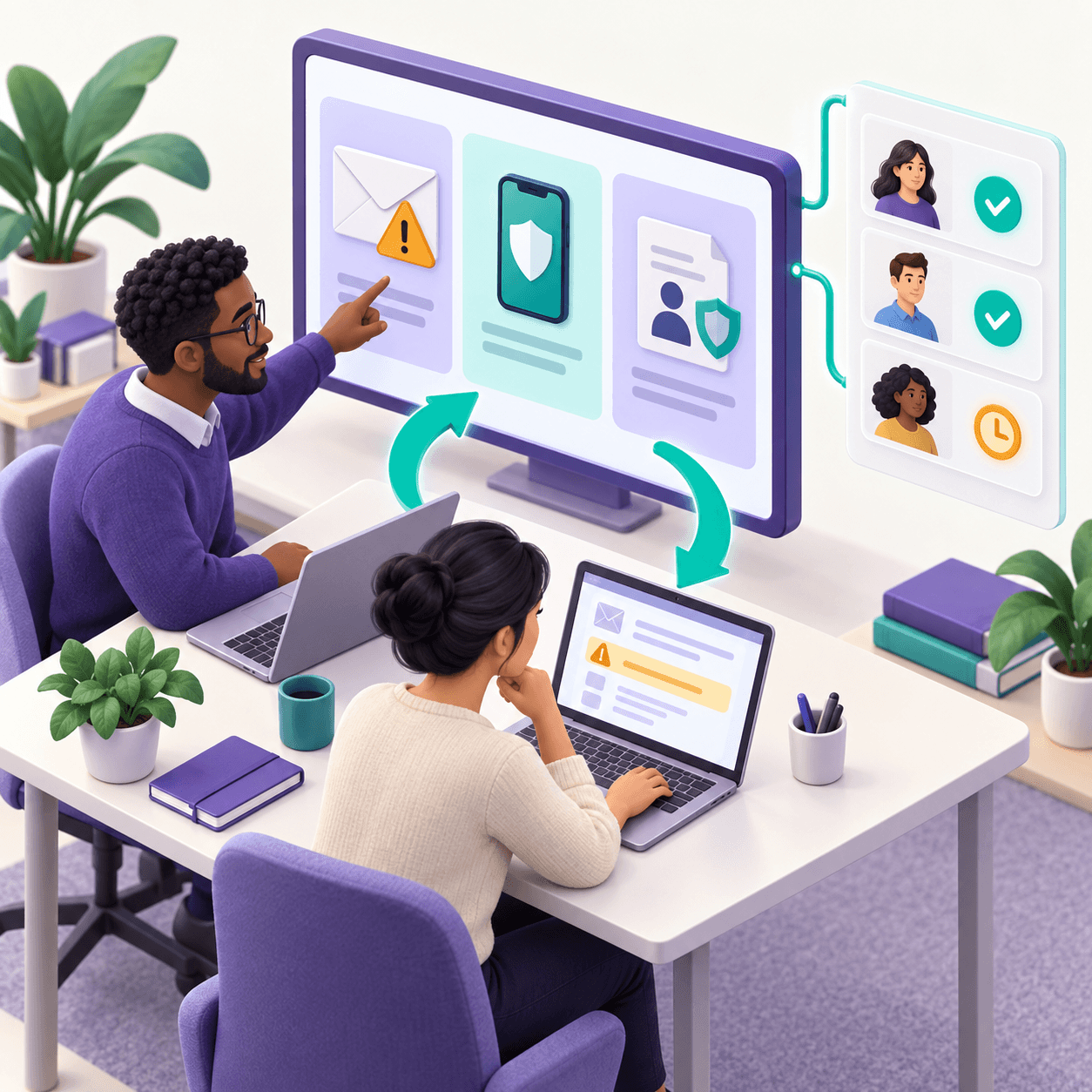
PROGRAMS
Learning matched to actual risk
- Core employee awareness
- Phishing and social-engineering simulations
- Developer secure-coding education
- Privacy and data-handling training
- Role-based modules for administrators and leaders
- Onboarding and annual refreshers
PROGRAM CYCLE
Assess, assign, simulate, coach, track, evidence
- Stage 01
Assess current exposure
Establish where the real risk sits before assigning anything.
- Stage 02
Assign relevant learning
Match content to role, system access and data handled.
- Stage 03
Run approved simulations
Test behavior safely, within agreed boundaries.
- Stage 04
Coach safely
Educate immediately after a failure, without exposure or blame.
- Stage 05
Track improvement
Follow repeat-risk trends rather than a single click rate.
- Stage 06
Export evidence
Hand compliance a defensible record, mapped to requirements.
RESPONSIBLE SIMULATION
How we run simulations — and what we refuse to do
No humiliation or public ranking
Individual results are never used to shame, rank publicly or discipline by default.
Clear authorization and boundaries
Every campaign is authorized in advance, with agreed scope and prohibited tactics.
No sensitive personal themes
Lures never exploit health, bereavement, immigration status, pay or similar themes.
Immediate education after failure
The teaching moment happens at the point of the mistake, not weeks later.
Restricted access to individual data
Individual performance data is available only to those who genuinely need it.
Measure the program, not the click
Program improvement and reporting behaviour matter more than a single click rate.
REPORTING
What you can show an auditor
- Completion and overdue learning
- Knowledge checks
- Simulation outcomes
- Repeat-risk trends
- Policy acknowledgement
- Framework evidence mapping
Course completion
- Security awareness essentialsAll staffOn track91%
- Secure coding for web servicesEngineeringOn track74%
- Handling customer dataSupport and salesOn track88%
- Incident reportingAll staffFollow up63%
Latest phishing simulation
- Campaign
- Invoice request — May 2026
- Recipients
- 214
- Reported to security
- 168
- Clicked link
- 19
- Submitted credentials
- 2
Completion records connect to compliance evidence, so training can be shown as an operating control rather than a spreadsheet.
QUESTIONS
Common questions
Can training be customized by role?
Does training satisfy a compliance requirement?
Tell us what you are working toward.
Send us a few details and the SecureC team will get back to you to talk through your scope, obligations and the practical next step.
Related reading
- Compliance readiness
Where training records become control evidence.
- SOC monitoring
What happens when a reported phish turns out to be real.
- ISO 27001 readiness
The people controls an ISMS depends on.
- Contact Us to Get Started
Plan audiences, cadence and simulation boundaries.