SECUREC ASSESS
Find vulnerabilities before they become incidents.
TESTING COVERAGE
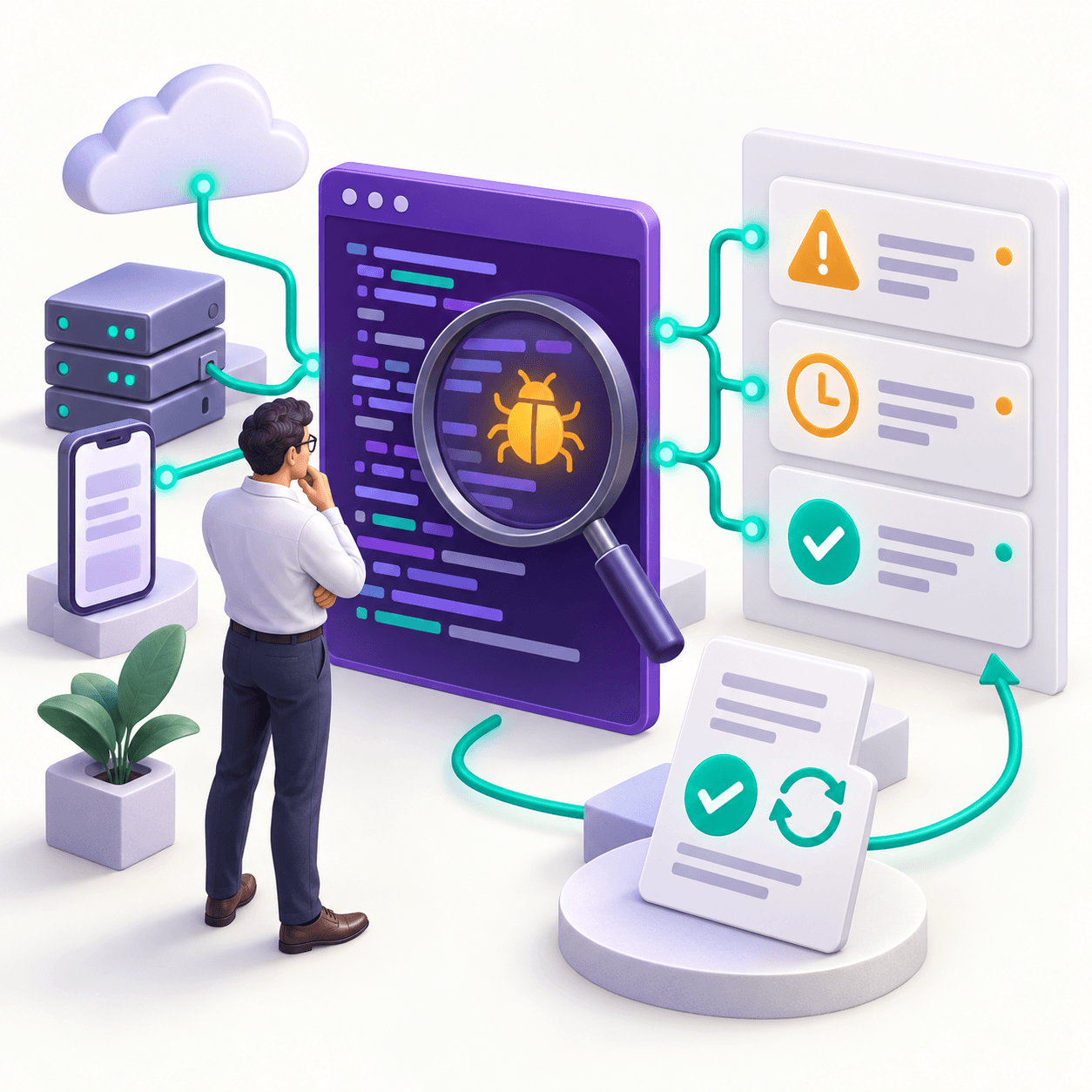
What we test
- Web applications
- Mobile applications
- APIs and integrations
- External and internal networks
- Cloud configurations
- Authentication and access flows
- Secure code review when included in scope
METHODOLOGY
Seven stages, and what each one produces
- Step 01
Scope
Assets, environments, authorization, exclusions and testing window agreed in writing.
- Step 02
Discover
Map the attack surface and the paths most likely to be taken.
- Step 03
Test
Combine appropriate automated tooling with manual validation.
- Step 04
Verify
Remove false positives and document reproducible evidence.
- Step 05
Prioritize
Score severity using exploitability, exposure and business impact.
- Step 06
Remediate
Provide specific, developer-usable recommendations.
- Step 07
Retest
Validate fixes and record closure status against the original finding.
HOW WE WORK
The commitments behind the method
Authorization and rules of engagement
Nothing begins without written authorization from someone entitled to give it.
- Named assets, environments and testing window agreed in advance
- Prohibited actions and safe methods written down, not assumed
- High-risk activity moved to staging or explicitly approved
- A named contact on both sides for the duration
Severity and prioritization
Severity reflects your context, not a scanner's default rating.
- Exploitability, exposure and business impact considered together
- False positives removed before a finding reaches you
- Reproduction steps included so your team can confirm it independently
- Disagreement about severity is discussed, not overridden
Evidence and data handling
Testing produces sensitive material. It is handled under the agreed policy.
- Access limited to the testers on your engagement
- Findings and evidence retained only as agreed
- Customer data never reused for another purpose
- Deliverables shared through a route you approve
Retesting and closure
A finding is not closed because someone said it was fixed.
- Fixes validated against the original reproduction steps
- Closure status recorded per finding
- Accepted risks recorded as accepted, with an owner
- Anything still open stated plainly in the closure report
We describe process rather than technique. Publishing tooling detail, payloads or environment specifics would help an attacker more than it helps a buyer.
What you receive
- 01Executive summary
- 02Technical findings with evidence
- 03Severity and business impact
- 04Affected asset and reproduction steps
- 05Remediation guidance
- 06Compliance and control mapping where relevant
- 07Retest and closure report
| ID | Finding | Surface | Severity | State |
|---|---|---|---|---|
| VA-2041 | Stored XSS in customer note field | Web application | High | Retest passed |
| VA-2044 | Missing authorization check on export endpoint | API | High | Fix in progress |
| VA-2049 | Session token retained after sign-out | Mobile (Android) | Medium | Awaiting retest |
| VA-2052 | Overly permissive storage bucket policy | Cloud | Medium | Fix in progress |
| VA-2057 | Verbose error messages disclose stack traces | Web application | Low | Accepted risk |
- Example penetration-test findings with surface, severity and remediation state.
VA-2041
Stored XSS in customer note field
- Surface
- Web application
- Severity
- High
- State
- Retest passed
VA-2044
Missing authorization check on export endpoint
- Surface
- API
- Severity
- High
- State
- Fix in progress
VA-2049
Session token retained after sign-out
- Surface
- Mobile (Android)
- Severity
- Medium
- State
- Awaiting retest
VA-2052
Overly permissive storage bucket policy
- Surface
- Cloud
- Severity
- Medium
- State
- Fix in progress
VA-2057
Verbose error messages disclose stack traces
- Surface
- Web application
- Severity
- Low
- State
- Accepted risk
Each finding carries reproduction steps, affected components and a remediation owner. Severity reflects exploitability and impact in context.
FRAMEWORK RELEVANCE
Where testing fits in a compliance program
- ISO 27001: supports risk treatment and control effectiveness evidence
- SOC 2: supports control claims that an examination will test
- PCI DSS: testing expectations depend on your validation path and scope
- Customer security reviews: verified findings and closure records
QUESTIONS
Common questions
Is a vulnerability scan the same as VAPT?
Can VAPT support compliance?
Will testing affect production?
Tell us what you are working toward.
Send us a few details and the SecureC team will get back to you to talk through your scope, obligations and the practical next step.
Related reading
- Compliance readiness
Where verified findings become control evidence.
- SOC monitoring
Detection and response after the test window closes.
- ISO 27001 readiness
How testing supports risk treatment in an ISMS.
- SOC 2 readiness
Evidence an examination will look for.
- Contact Us to Get Started
Agree scope, environments and a testing window.